
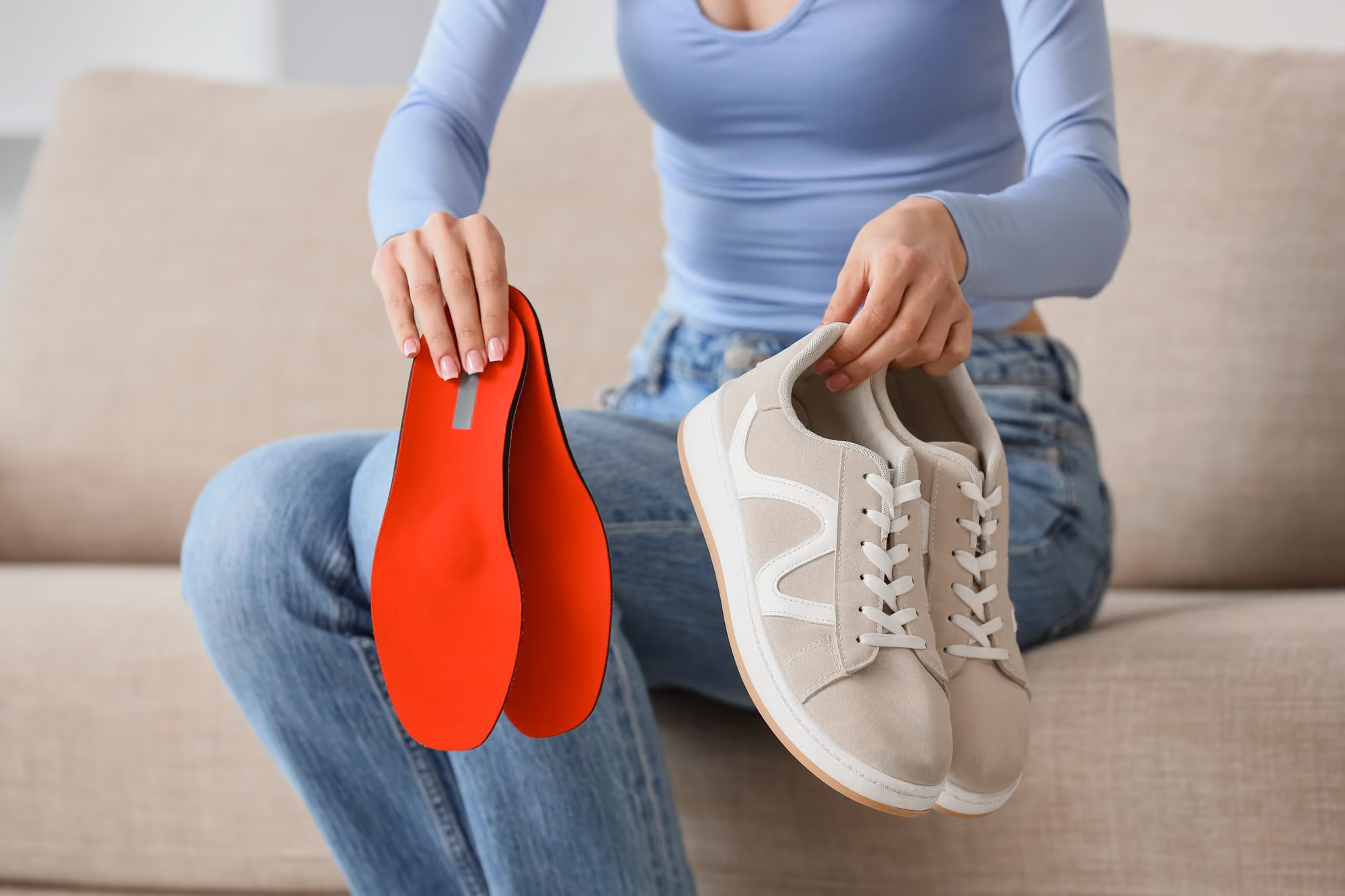
What makes an orthotic “custom,” and why it matters
A drugstore insert is built for the average of a million feet; a custom orthotic is built from a mold or scan of yours, to a podiatrist’s prescription that specifies exactly what each part of the device should do: support here, cushion there, offload this spot, limit that motion. The materials matter as much as the shape: prescription devices are engineered to hold their correction under your full body weight for years, while foam drugstore inserts flatten into expensive sock liners within months.
The honest comparison: quality over-the-counter inserts are a reasonable first step for mild, generic aches, and we’ll say so when that’s all you need. Custom devices earn their cost when there’s a real mechanical problem to correct, a condition that needs precise offloading, or a body that’s already failed the drugstore experiment.
What custom orthotics actually treat
Orthotics aren’t a product we sell; they’re a treatment we prescribe, most often for:
- Plantar fasciitis and heel pain: offloading the fascia while it heals, then preventing round two
- Flat feet and fallen arches: restoring alignment while you’re on your feet, including PTTD support
- Foot and ankle arthritis: redistributing load away from worn joints, often with rocker-sole footwear strategy
- Morton’s neuroma and ball-of-foot pain: built-in metatarsal support placed precisely, not guessed
- Diabetic feet: pressure redistribution that protects high-risk spots before they ulcerate; for qualifying patients, Medicare’s therapeutic shoe benefit includes custom inserts
- Recurring sports injuries: when mechanics are the reason the same injury keeps returning
Built for how you actually live
An orthotic that only works in sneakers is useless to a lineman, a nurse, or a rancher. Fitting devices to real life is where experience shows: work-boot orthotics that survive twelve-hour shifts at the mine or on the ranch, hiking-boot devices for Mount Graham and Huachuca trail regulars, athletic versions for runners and court sports, and slimmer dress devices when the job requires them. Tell us what’s on your feet all day, and we’ll build for that, not for the shoe you wear twice a year.
Bracing: support beyond the shoe
Sometimes the foot needs more than an insert can give. That’s where bracing comes in. Ankle braces stabilize joints that keep rolling after repeated sprains; supportive bracing protects a failing arch in adult-acquired flatfoot (PTTD), where it can genuinely halt progression; unloading braces take pressure off arthritic ankles; and walking boots protect healing injuries while keeping you mobile. The orthotic-or-brace question (often it’s both, working together) comes down to what’s failing and how much control it needs, exactly what the evaluation determines.
The process, start to finish
- Evaluation first. Exam, gait assessment, and the honest question: will orthotics actually fix this problem, or is something else the better move?
- Molding/scanning of your feet in corrected position, the step that makes “custom” mean something
- Prescription and fabrication: materials and modifications matched to your diagnosis, weight, activity, and footwear
- Fitting and break-in guidance: a proper wear-in schedule prevents the sore first week that gives orthotics a bad name
- Adjustments included: feet and devices get refined, not abandoned; most devices then last 2-5 years, with refurbishing often possible
Frequently asked questions
Are custom orthotics worth it over Dr. Scholl’s?
For a real diagnosed problem, usually yes: correction where you need it, durability measured in years, and precision an off-the-shelf insert can’t offer. For mild generic soreness, an OTC insert may be plenty, and we’ll tell you which case you are.
How long do custom orthotics last?
Typically 2-5 years depending on materials, body weight, and daily demands. Top covers can be refreshed and prescriptions updated without starting over.
Do orthotics weaken your feet?
No good evidence supports that worry for prescribed use. Orthotics correct alignment; they don’t do your muscles’ job. We often pair them with strengthening so you get both support and resilience.
Will orthotics fit in my work boots or hiking boots?
Yes. Devices are built for the footwear you name. Boots are usually easier to fit than dress shoes, with room for full-depth support.
When is a brace better than an orthotic?
When the problem is joint instability or a failing tendon rather than foot mechanics alone: chronic ankle rolling, adult-acquired flatfoot, arthritic ankles. Orthotics correct how the foot loads; braces control how a joint moves. Many patients do best with both.
Does insurance cover custom orthotics?
Coverage varies by plan; Medicare covers therapeutic inserts for qualifying diabetic patients through the diabetic shoe benefit. Our staff will help you check your specific benefits before you commit.
Support built for your feet, and your boots. Call Safford: (928) 348-3700 or Sierra Vista: (520) 515-FOOT (3668), or request an appointment. New patients welcome; most insurance accepted.