
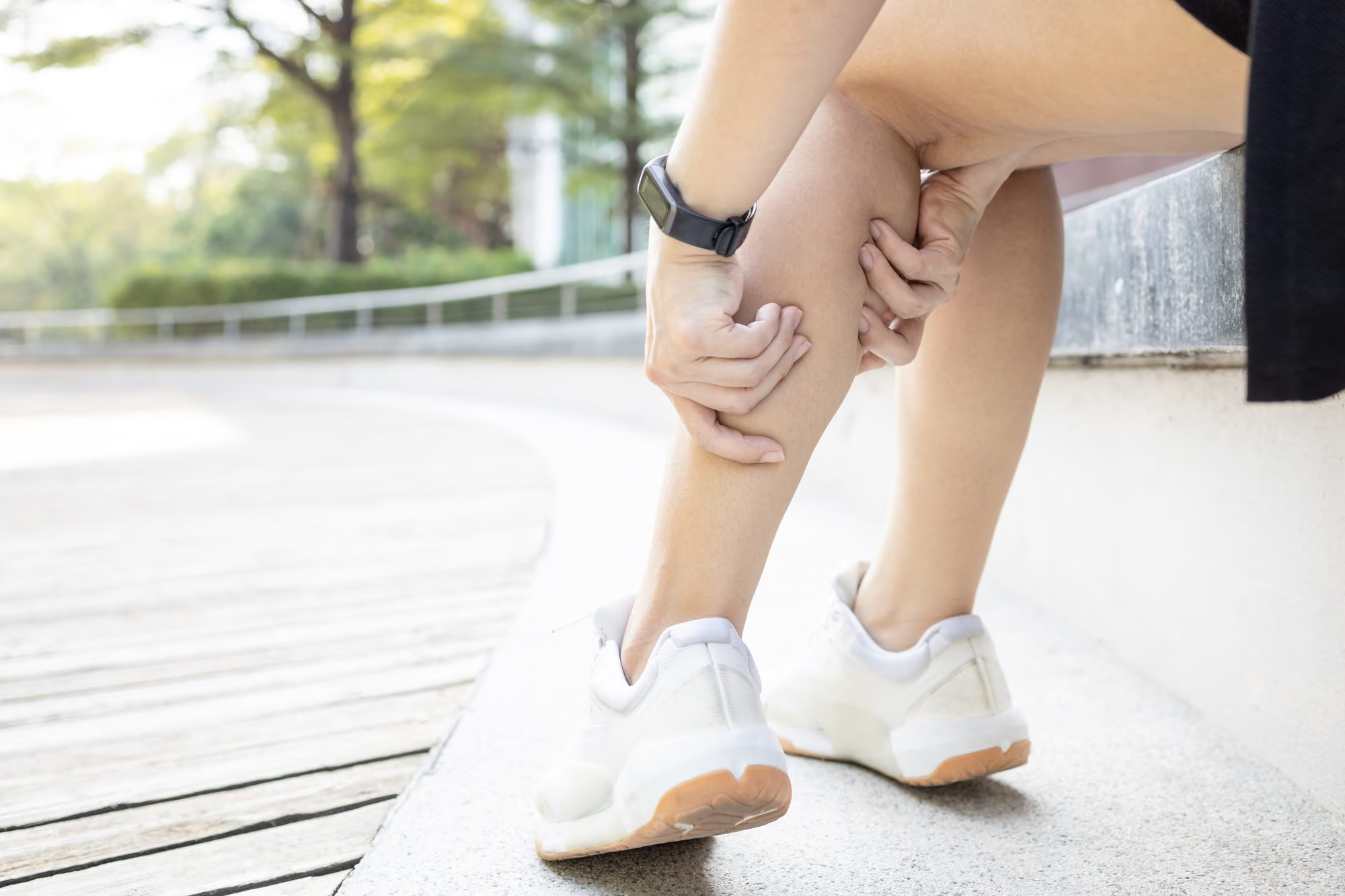
The strongest tendon in your body, and its weak spot
The Achilles handles forces of several times your body weight with every running stride and every step up a trail grade. Its weakness is blood supply: a zone a few centimeters above the heel gets relatively little, so when training load outruns recovery, that zone frays faster than it repairs. That’s why Achilles pain is famously a “too much, too soon” injury: the new running program, the first month of rucking at Fort Huachuca, the vacation with ten times your usual steps, the steep miles on Carr Canyon Road after a sedentary winter.
Location matters for treatment, so we distinguish two versions: midportion tendonitis (the classic sore, sometimes thickened zone above the heel) and insertional tendonitis (pain right where the tendon anchors to the heel bone, often with a bone bump and irritated by shoe backs, related to what many people call a “pump bump,” and a cousin of the posterior heel spur).
Symptoms that point to the Achilles
Morning stiffness in the cord that eases with a few minutes of walking; pain at the start of a run that “warms up,” then returns worse afterward; tenderness or a firm nodule when you pinch the tendon; pain climbing stairs or hills. And the red flag that skips the line: a sudden pop in the back of the ankle with immediate weakness. That’s a possible rupture and needs same-day evaluation, not a wait-and-see week.
Why “resting until it stops hurting” fails
Complete rest calms symptoms, but tendons don’t rebuild strength through rest. They rebuild through the right dose of load. Patients who rest three weeks, feel fine, and return to full activity almost always boomerang back. Effective treatment loads the tendon progressively, which is a different thing from pushing through pain.
How we treat Achilles tendonitis at Mountain Vista Foot & Ankle
- Load management, not shutdown: we trim the aggravating activity to a level the tendon tolerates while keeping you moving
- Eccentric strengthening: the well-proven heel-drop protocol, adjusted for midportion vs. insertional cases (this detail matters; the standard version can aggravate insertional pain)
- Heel lifts and footwear changes to reduce tendon strain daily, plus custom orthotics when mechanics like flat feet or tight calves feed the problem
- Calf flexibility work: tight calves are the usual accomplice
- Immobilization in a boot for severe flares, briefly and purposefully
- Advanced options for chronic tendinosis that resists months of proper rehab, with surgical debridement reserved, per our philosophy, as the true last resort
One caution: cortisone injections into the Achilles are generally avoided. They can weaken the tendon and raise rupture risk. If someone offers you a quick shot in this tendon, ask more questions.
Frequently asked questions
How do I know if it’s Achilles tendonitis or something else?
Pain and stiffness localized to the cord above the heel, worst with first steps and after activity, strongly suggests Achilles tendonitis. Pain under the heel is more often plantar fasciitis. An exam sorts it quickly.
Can I keep running or hiking with Achilles pain?
Often yes, at reduced load, as part of a structured plan. Pushing full mileage through worsening Achilles pain is how tendonitis becomes chronic tendinosis, or a rupture.
How long does Achilles tendonitis take to heal?
Recent-onset cases: typically 6-8 weeks with proper loading. Chronic cases: often 3-6 months of consistent rehab. Slow, boring, and effective beats fast and recurring.
What happens if Achilles tendonitis is ignored?
The tendon can degenerate (tendinosis), thicken, and weaken, raising the risk of partial tears or full rupture, which frequently means surgery and months of recovery. Early treatment is vastly cheaper in every sense.
Do heel lifts really help the Achilles?
Yes. A small temporary lift reduces tendon strain with every step and calms symptoms while rehab does the real work. It’s a bridge, not the whole treatment.
Don’t let a sore tendon become a torn one. Call Safford: (928) 348-3700 or Sierra Vista: (520) 515-FOOT (3668), or request an appointment. New patients welcome; most insurance accepted.