
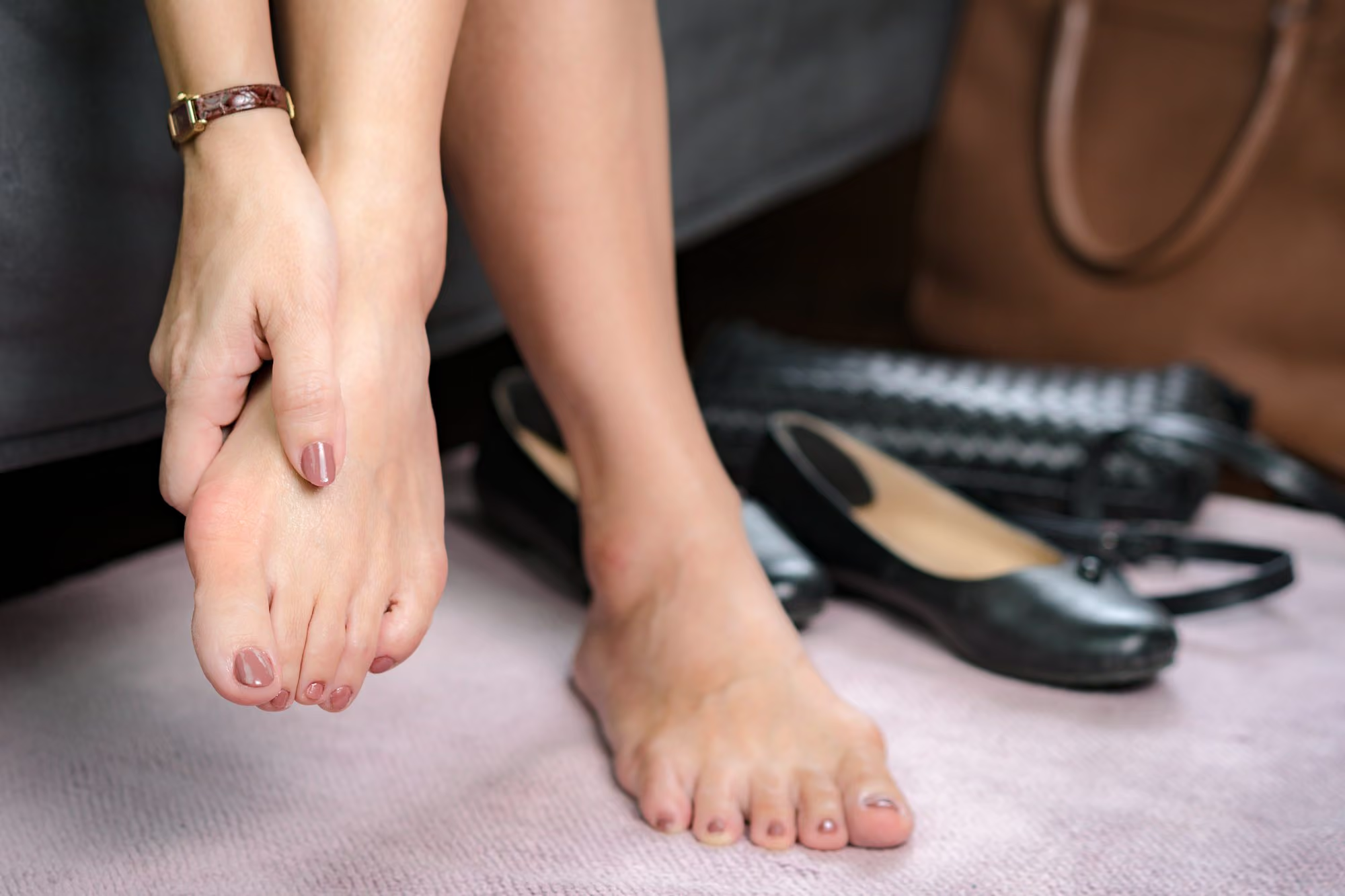
Why is my toe curling under?
The toes are held straight by a tug-of-war between tendons on top and bottom. When that balance tips (because of foot structure you inherited, a bunion crowding the big toe into its neighbors, arthritis, a past toe injury, or years in shoes that scrunch the toes), the middle joint buckles upward. The result: a knuckle that rubs the top of your shoe, pressure at the toe tip, and often a painful corn where the shoe contacts the bend.
Left alone, hammertoes follow a predictable path: flexible at first (you can straighten the toe with your finger), then progressively stiff, then rigid. The treatment window matters.
Flexible vs. rigid: the distinction that drives treatment
Flexible hammertoe: the joint still moves. This is the stage where padding, footwear, orthotics, and exercises genuinely help and can keep the toe functional for years.
Rigid hammertoe: the joint has fixed in the bent position. Pads can still cushion it, but no stretch or splint will straighten a rigid toe. If it’s painful, corrective options are surgical, though far more minor than most people fear.
One important local note: if you have diabetes or neuropathy, a rubbing hammertoe isn’t a cosmetic issue. It’s a pressure ulcer waiting to happen. We treat these proactively as part of diabetic foot care.
Non-surgical hammertoe treatment
At Mountain Vista Foot & Ankle, we start conservative, in line with our minimally-invasive-first philosophy:
- Footwear changes: a deeper, wider toe box eliminates the daily friction war (we’ll give you specifics that work with work boots, not just sneakers)
- Pads, sleeves, and crest pads to cushion the knuckle and support the toe tip
- Corn and callus care: professional trimming of the pressure points, never bathroom-razor surgery
- Custom orthotics to rebalance the mechanics driving the buckling, especially with flat feet or bunions in the mix
- Toe stretching and strengthening to preserve flexibility while the toe still has it
When a hammertoe needs correction
If a rigid, painful toe is limiting your shoes or your life, or repeatedly forming sores, a corrective procedure realigns it, typically by releasing tight tendon and addressing the small joint at the bend. These are commonly done on an outpatient basis, often with the option of minimally invasive technique, and most patients are walking in a protective shoe the same day. We’ll be straightforward about whether your toe actually warrants it; plenty don’t.
Care in the Gila Valley and Cochise County
From Safford, Thatcher, and Pima to Sierra Vista, Fort Huachuca, Benson, and Bisbee: hammertoe care, from a simple corn trim to surgical correction, without the trip to Tucson.
Frequently asked questions
Can a hammertoe straighten on its own?
No. Once the imbalance sets in, the deformity holds or progresses. Early treatment can slow it dramatically and keep it comfortable, but it won’t self-correct.
Are hammertoe straightening splints worth it?
For flexible hammertoes, splints and pads can relieve pressure and improve comfort. They won’t cure the imbalance, and they can’t straighten a rigid toe.
Why do I get a corn on top of my bent toe?
The bent knuckle presses the shoe with every step, and skin thickens under repeated pressure. Trimming the corn helps temporarily; reducing the pressure (or straightening the toe) fixes the cause.
Is hammertoe surgery a big operation?
It’s typically an outpatient procedure measured in minutes per toe, with same-day walking in a surgical shoe. Full swelling resolution takes weeks, but it’s among the more minor foot procedures.
When is a hammertoe urgent?
If you have diabetes or numbness and the toe is developing an open sore or color change, be seen promptly. Small toe wounds can escalate quickly when sensation or circulation is reduced.
Don’t wait for a flexible toe to become a rigid one. Call Safford: (928) 348-3700 or Sierra Vista: (520) 515-FOOT (3668), or request an appointment. New patients welcome; most insurance accepted.